

Emancipation in Suriname and the Dutch Antilles is celebrated every 1 July with Keti Koti. Leading the annual commemoration's procession through Amsterdam, Edmon Ry Sael (he/him) speaks to Chiara Sriram (she/her) about connection to ancestors and the importance of memory.
Mini Maatje (‘Little Buddy’ in English) is TQTB’s guide to understanding and connecting with Amsterdam and Dutch culture. This feature is in The Quick + The Brave Paper Zero: ‘Advocates + Allies’ out now.
Order yours from our shop on Ko-Fi today.
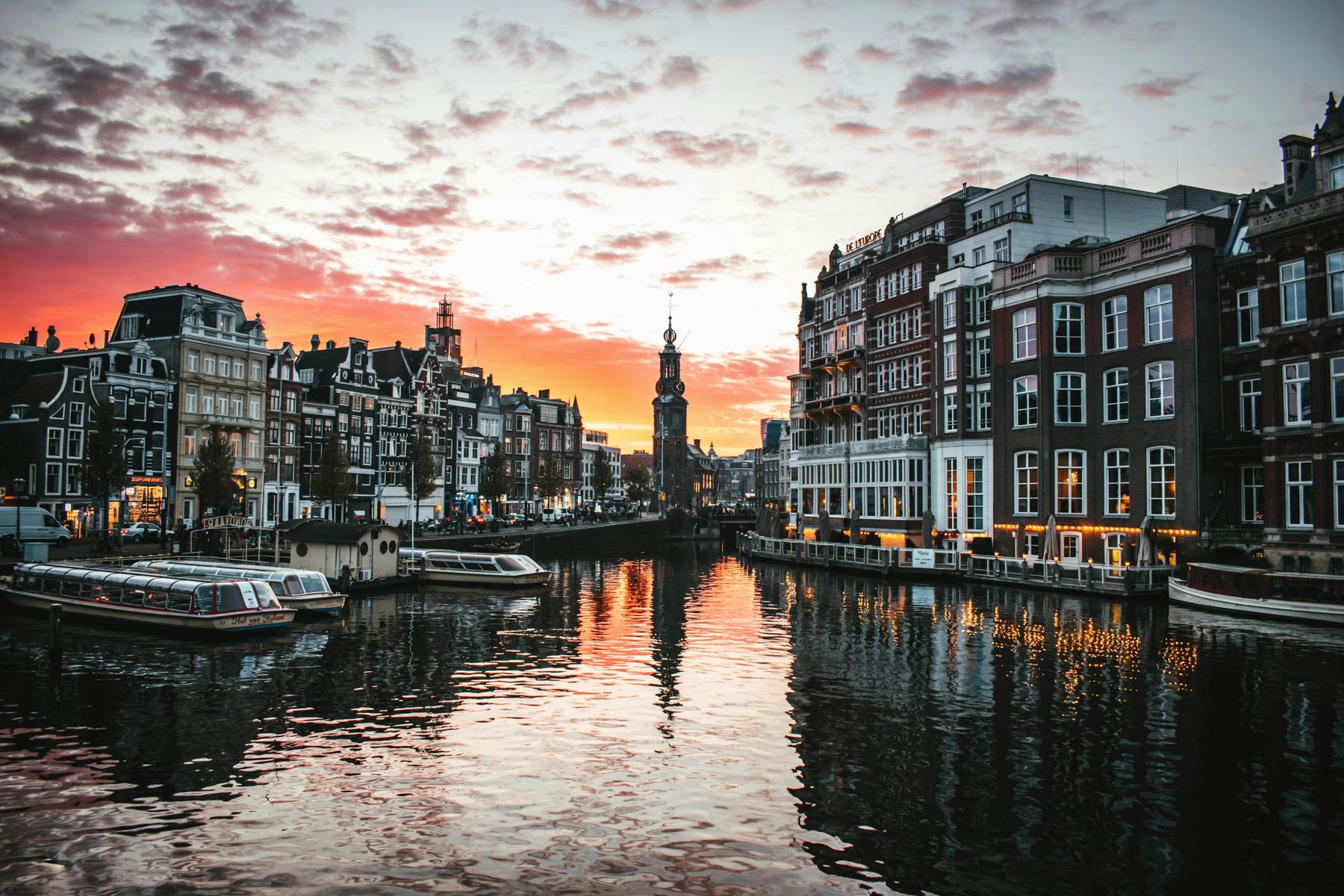
2025 marks the 750th anniversary of the founding of the city of Amsterdam. Established in 1275, the city has played a pivotal role in finance, commerce and culture in Europe since the sixteenth century.
Today, the Dutch capital is an internationally renowned tech hub, home of modern finance with the oldest stock exchange in the world and a populace that counts over 180 nationalities. Its port is the fifth largest in Europe.
How did this young city make such an impact?
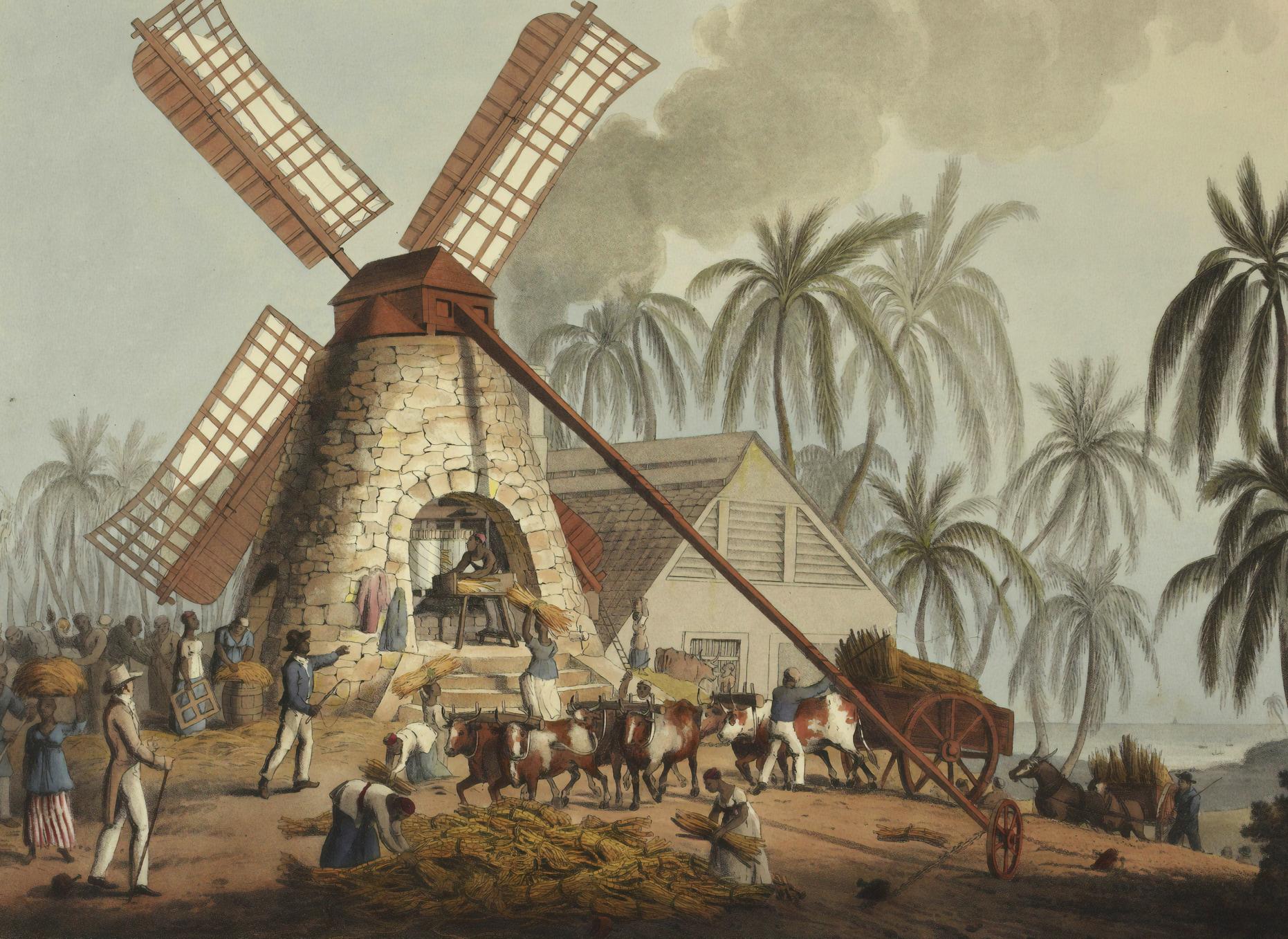
Colonisation and the slave trade shaped society and capitalism as we know it today with European nations building wealth and resource over more than 300 years through a cycle of exploitation and extraction.
Entire economies grew around merchant ports across the continent due to the Transatlantic Slave Trade with the first Dutch shipment of human cargo – 130 Angolan men, women and children – arriving into Middelburg in the south of the Netherlands in 1596.
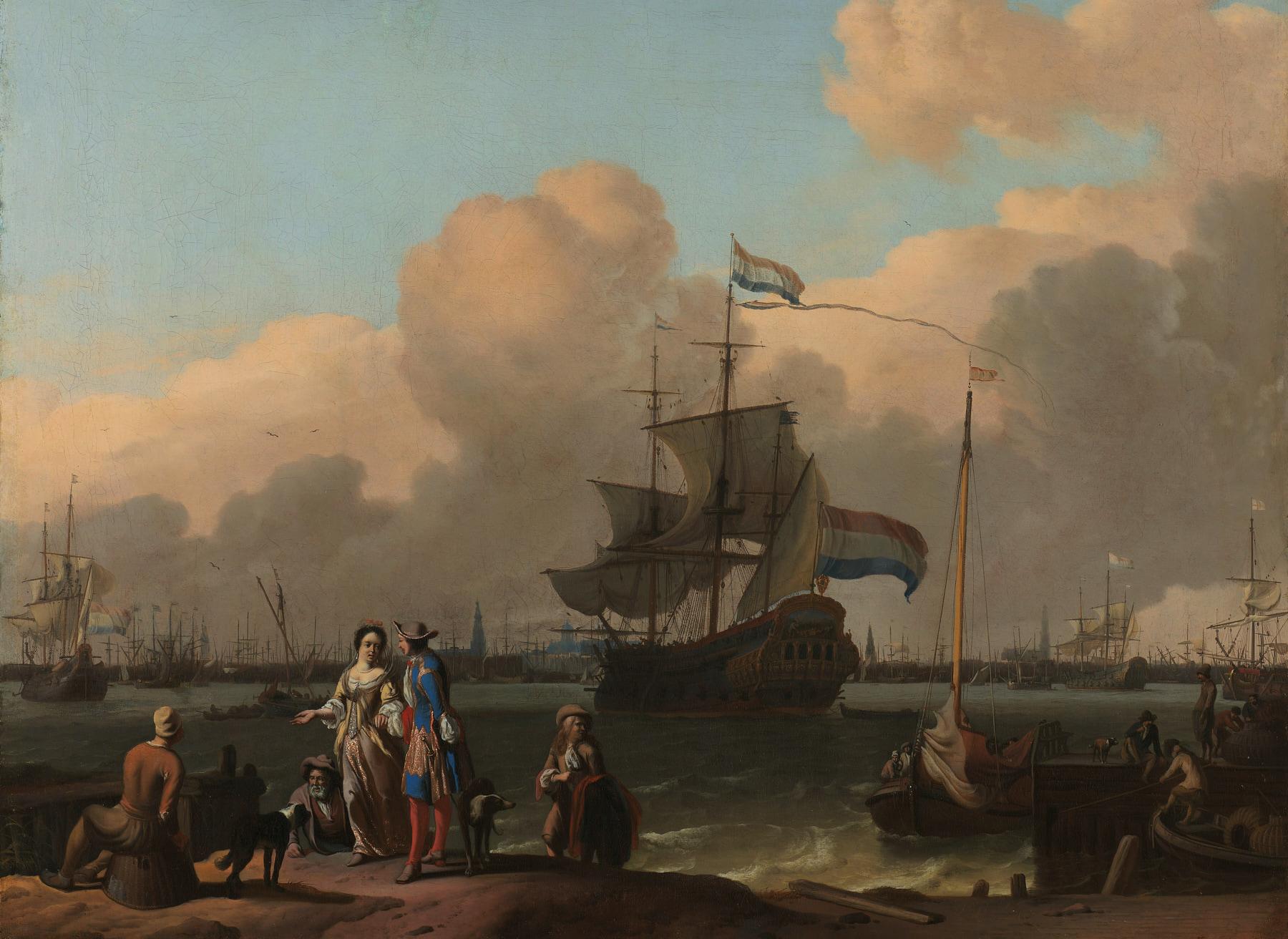
In the so-called Dutch ‘Golden Age’, the port of Amsterdam played a significant role as the main harbour for the Dutch East India Company (or VOC) which had a monopoly over trade in Asia. In 1621, the Dutch West India Company (or GWC) was also established in the capital to expand Dutch interests in Africa and the Americas.
By the 1600s, the size of the Dutch merchant fleet exceeded that of the English, French, Spanish, Portuguese and German fleets combined with the VOC trading as the world’s first public limited company from 1602.
The human cost of the slave trade is unfathomable with an estimated 850,000 enslaved Africans taken across the infamous Middle Passage by the Dutch alone.
On the Beeckestijn, one of the Dutch West India Company’s slave ships that moored in Amsterdam, up to a third of the enslaved lost their lives at sea over the span of its seven journeys across the Atlantic. The ship's inaugural journey set sail from the Netherlands in 1721. Trafficked Africans were forced to stay in the cargo hold for almost a year before setting foot in the Caribbean.
The concept of insurance came about to cover plantation owners for the loss of their merchandise.
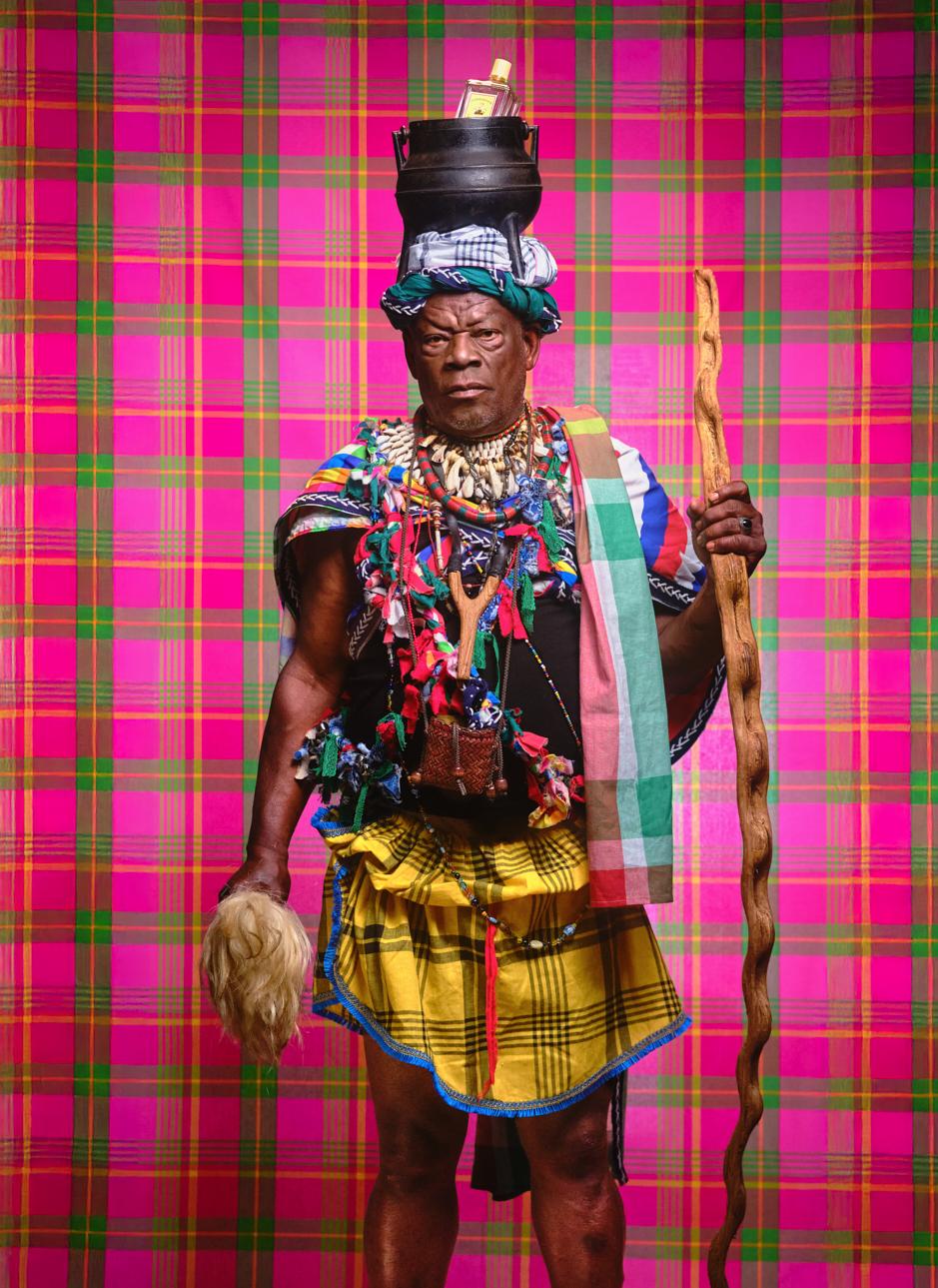
Slavery was abolished in Suriname and the Dutch Antilles on 1 July 1863 however, it would take until 1873 for the enslaved to be granted their freedom following a mandatory ten year transition period. During this time, they were required to carry out the same work for minimal pay to compensate plantation owners for their loss of earnings to the tune of nearly 10 million florins (around €250 million now).
Today, Surinamese and Antillean communities on both sides of the Atlantic commemorate Emancipation every 1 July with Keti Koti.
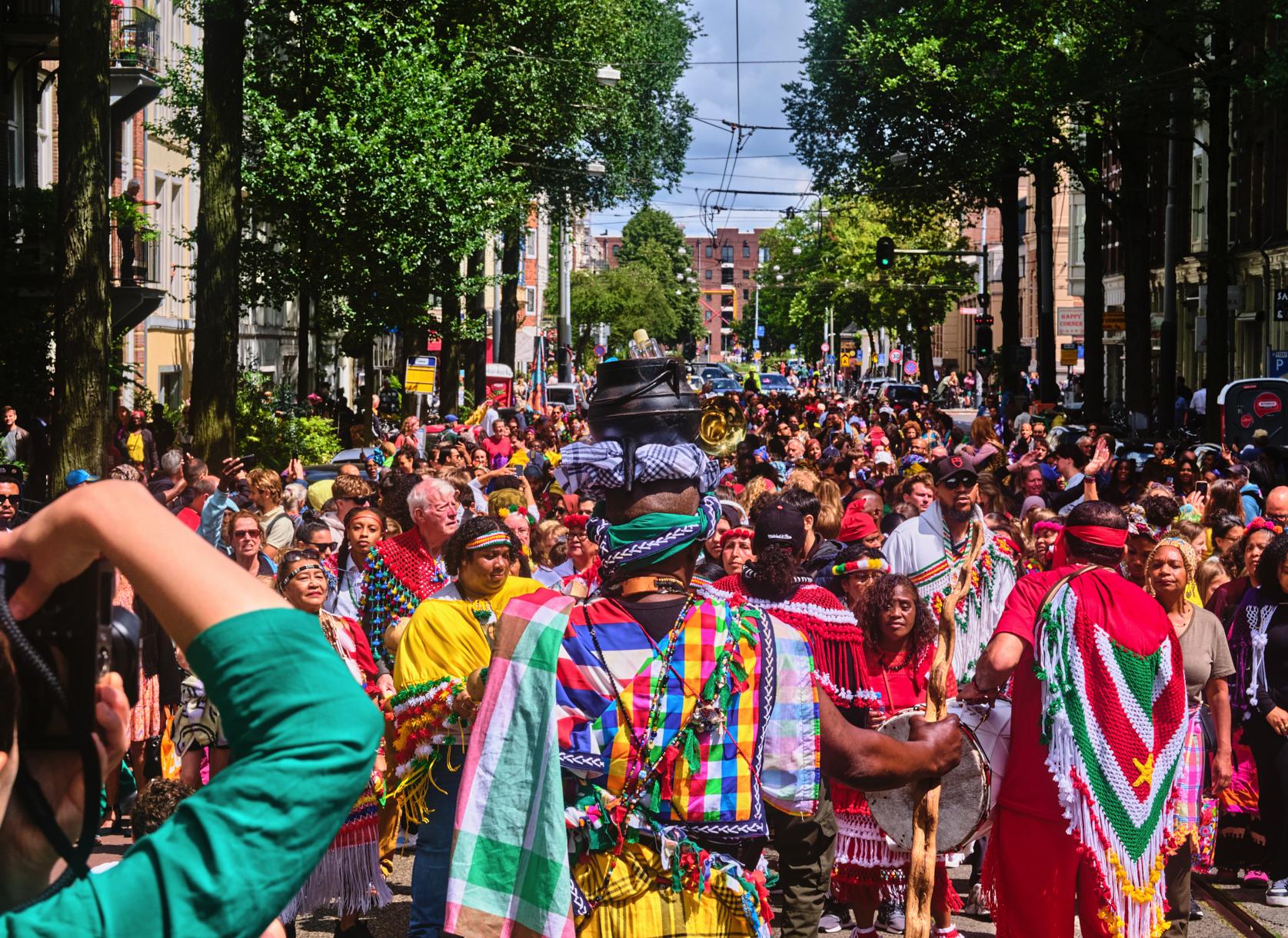
Meaning ‘broken chains’ in Sranan Tongo, the creole language of Suriname, the annual festival includes a procession known as ‘Bigi Spikri’ (‘big mirror’) where participants wear traditional cultural outfits and dance to live music to celebrate the resistance, resilience and joy passed on to them by their ancestors.
Keti Koti is observed in Amsterdam with commemorative ceremonies in the east of the city in Oosterpark at the National Monument of Slavery History followed by a festival with live performances, food and a market on the Museumplein in the heart of the city.
Proceedings begin with Amsterdam’s own Bigi Spikri.
The procession in the capital has officially taken place since 2009, starting at Stopera on the Waterlooplein before winding its way through the Plantage (or Plantation) district towards Oosterpark.
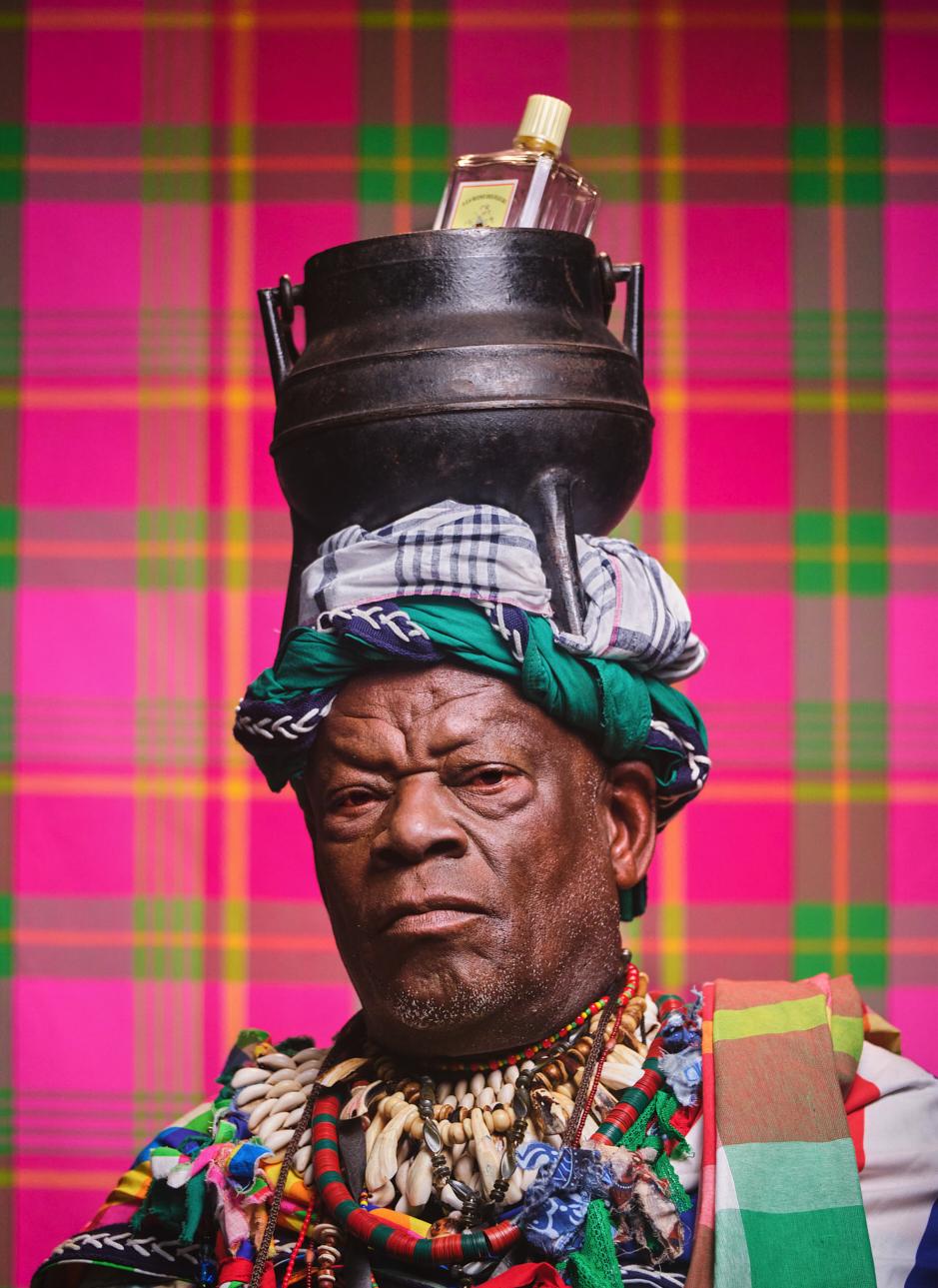
Edmon Ry Sael leads Bigi Spikri through the streets of Amsterdam.
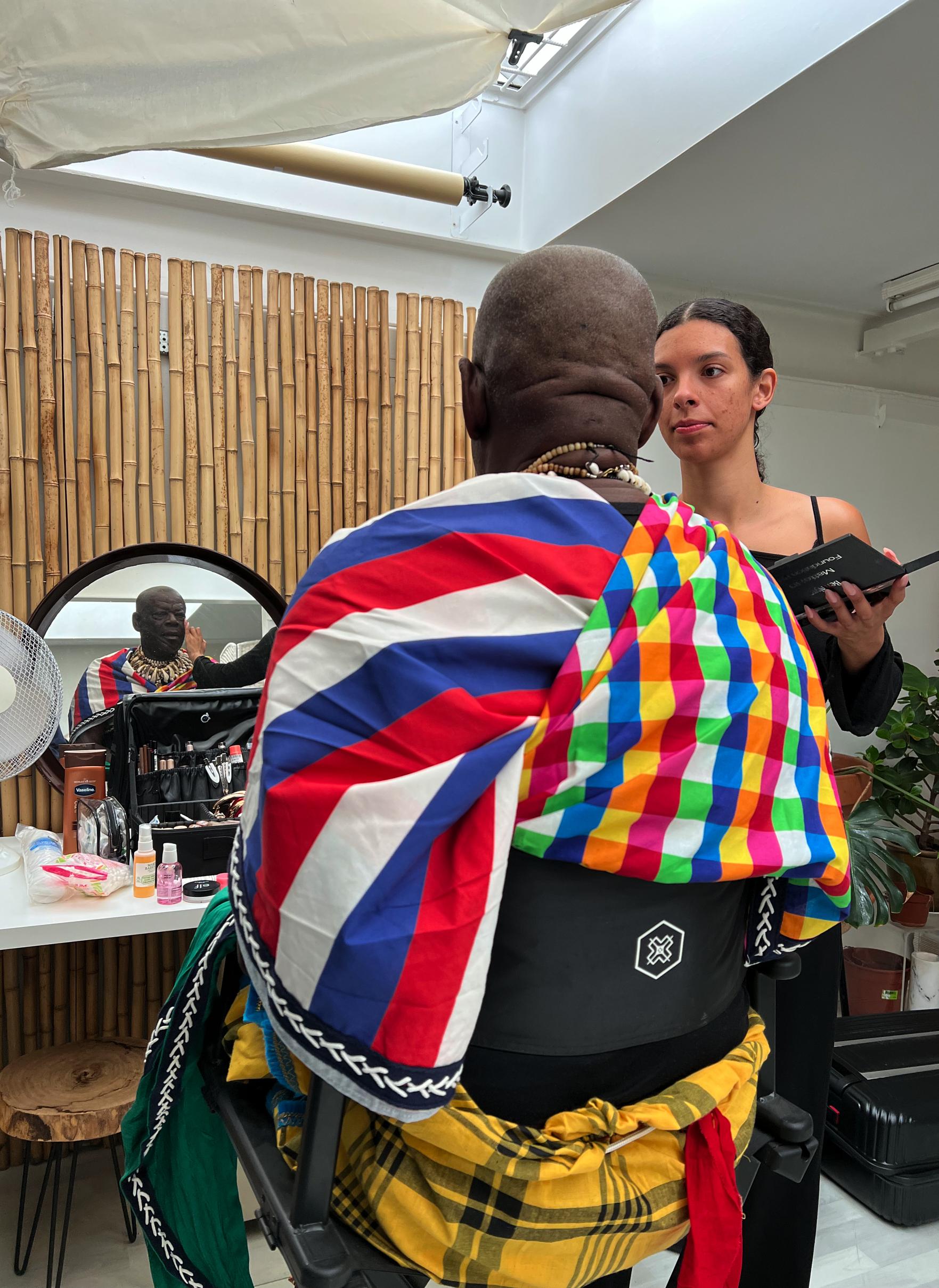
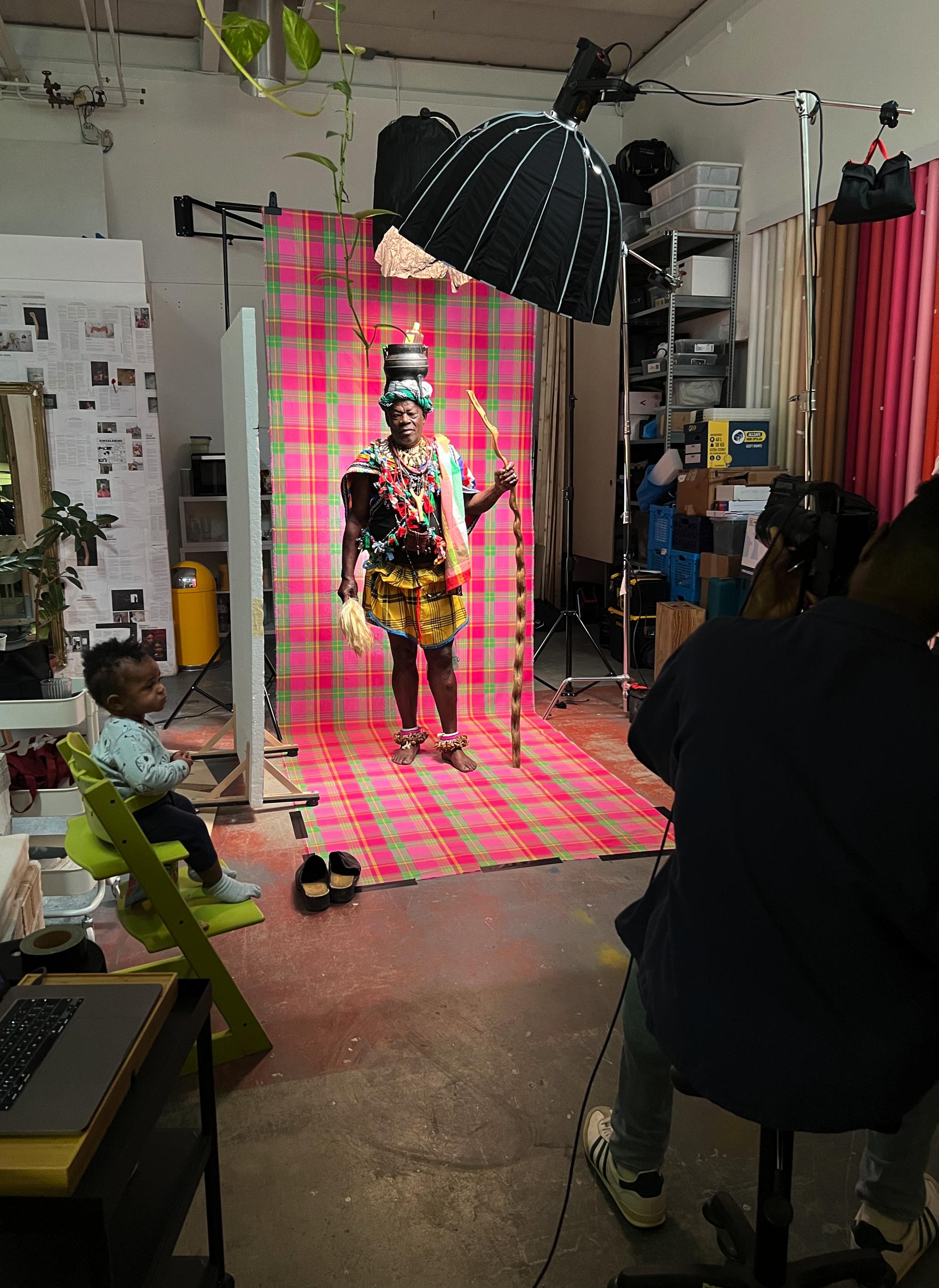
Taking part in the procession in Paramaribo, Suriname as a teenager before moving to the Netherlands, each year he wears the traditional clothes of the Maroons who freed themselves to live in the Amazon interior of the country.
Chiara Sriram spoke with Edmon to find out more about the significance of the commemoration and how he has seen Keti Koti evolve over the years.
Chiara Sriram: What do people need to understand about Keti Koti?
Edmon Ry Sael: Keti Koti commemorates the abolition of slavery in the former Dutch colonies. Countries such as Suriname, Curaçao, Sint Maarten and Aruba in 1863.
The practice of slavery continued in Suriname and the Antilles for another decade after abolition with the last enslaved people finally freed in 1873. It is just one of the many inhumane abuses our ancestors faced which impacted us down the generations. The commemoration is a way for us to collectively find peace while ensuring that the repercussions are never forgotten.
This chapter of our history isn’t isolated, it happened across different continents and you see the traces of that trauma to this day when you go to Suriname, for example.
It’s important to acknowledge what happened and that the implications of it remain current. Some of the plantations are still around today – the older generations still remember and worked on them.
Keti Koti is a reminder that history remains with us through our bloodlines and culture.
The ancestors may no longer be alive but their spirits live on and we can draw on their strength and resilience.
The spirits come down to us through the generations to keep the memory of resistance alive.
Family members come and tell us what happened.
CS: Why is Keti Koti important to you personally?
ERS: Keeping the memory of the ancestors alive was instilled in me from a young age. I think it was in the third grade in History class that I learned that I still have family and roots in Africa.
By 14, I was drawn to learn more independently and find out what happened to us during slavery.
CS: Why is it important for you to lead the Bigi Spikri procession for Keti Koti and how did you start?
ERS: I always felt that it was important to take part in Keti Koti – I started when I was 14 after learning our history and trauma.
I was aware of certain feelings within the culture that lived on in me. At a certain point, this awareness, which my elders also encouraged and helped to shape, led me to be part of the annual parades in Paramaribo.
Since I moved to Amsterdam, I’ve led the procession for twenty three years because my costume and jewellery stand out.
There’s always a lot of curiosity about the significance of the outfit and the meaning behind different elements. For me, it was just normal – a part of my culture.
Not everyone is going to love you. Of course, there are also negative responses as well as positive. The narrative created by some of the men of the media world would have you believe that the commemoration shouldn’t continue.
CS: How have you seen Keti Koti evolve over the years?
ERS: Internationally there is a lot more awareness of the event. Thousands of people come from all over the world to join us here in the Netherlands. Wherever people are from, there’s a lot of interest in the outfit I wear when leading the crowd.
It’s nice to see the connection that other cultural groups, such as the Moroccan community, engage with Keti Koti. Everyone participates – there has been a lot of growth in attendance over time.
I’m thankful to have been entrusted to lead Bigi Spikri for so many years. In these changing times, I hope people continue to acknowledge its importance.
For more information about Keti Koti and events throughout Amsterdam’s 750th anniversary, visit www.iamsterdam.com.
Mini Maatje (‘Little Buddy’ in English) is TQTB’s guide to understanding and connecting with Amsterdam and Dutch culture.
PHOTOGRAPHY + CREATIVE DIRECTION: Obi Mgbado
WARDROBE: Edmon Ry Sael
HAIR + MAKE UP: Chiara Sriram
PRODUCER: Marie-Anne Leuty
[kofi]