
Holding Space for Black British Art

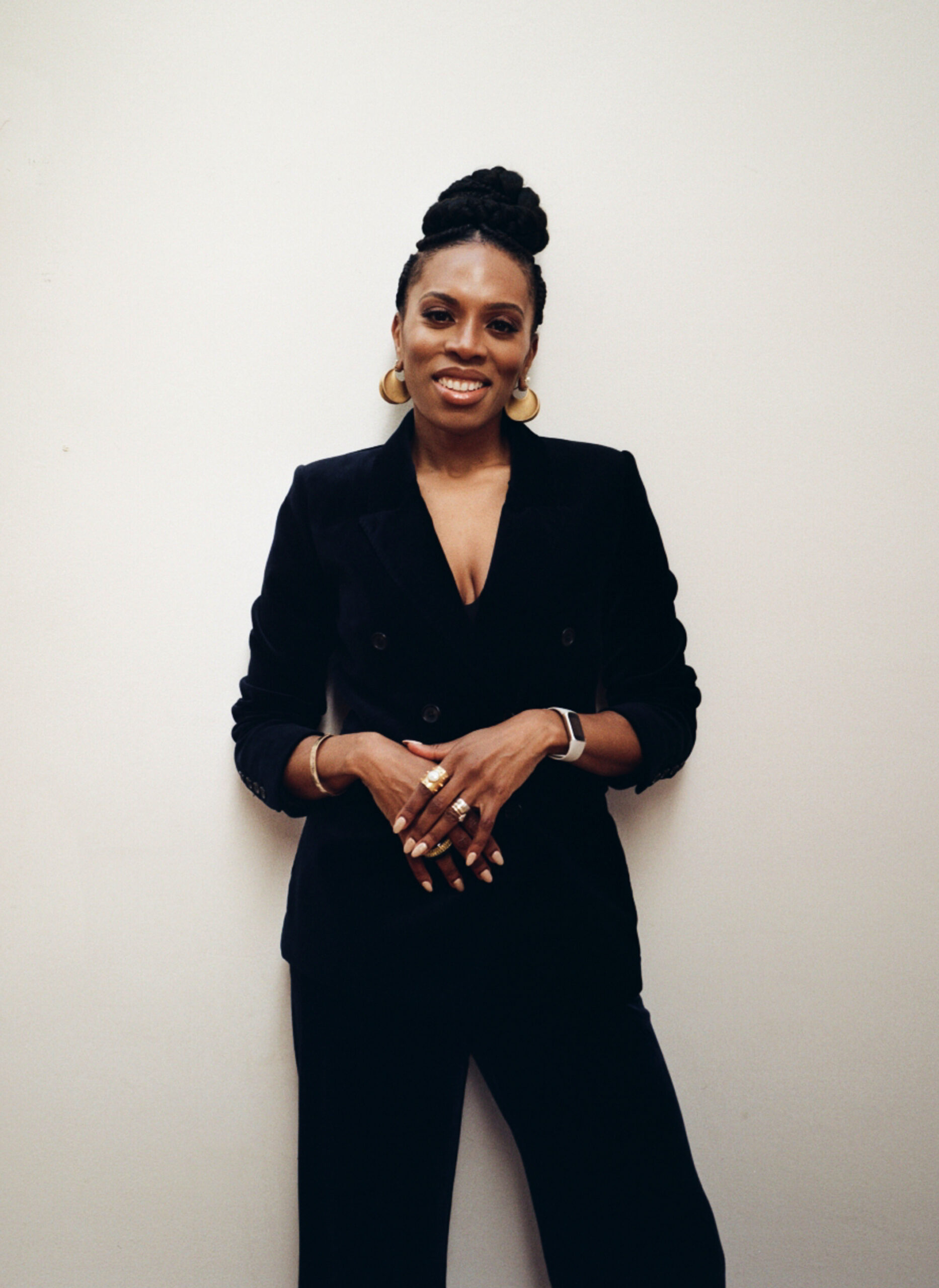
The Black British art scene has a passionate advocate in Lisa Anderson (she/her). The independent London-based curator, Founder of Lisa Anderson Arts Advisory and former Managing Director of the Black Cultural Archives, Brixton, talks to Marie-Anne Leuty (she/her) about cultural icons, community and active allyship.
This article features in The Quick + The Brave: Paper Zero ‘Advocates + Allies’ out now.
Order yours from our shop on Ko-Fi today.
Marie-Anne Leuty: Hi Lisa, how’re you? Thanks for making the time for this conversation.
Lisa Anderson: Hi Marie-Anne, I’m well thanks, looking forward to this.
ML: Nice, we’ll get right into it. My first question is what is your personal definition of advocacy?
LA: I think of advocacy as having an active voice for the community.
The definition of advocacy for me is about being active. It's about using your voice for good – for the pursuit of social justice, liberation and equity.
In the context of my recent role as Managing Director of the Black Cultural Archives in Brixton and when founding Black British Art platform over a decade ago, I’ve always believed that being active is about being strategic and offering a solution to an issue. Not just talking for the sake of talking but to have a positive impact on society.
It's not advocacy if it's not helping or shifting possibility. Advocacy is about meeting qualified social needs with a strategy that can be effectively communicated.
On a really personal level, because I am a woman of Christian faith, at the root of advocacy is a commitment to care – if you dig deeper down into that, it’s love. What kind of love doesn't advocate for those in need?
I have a personal, spiritual compulsion to advocate for those who I say I want to represent. Because of my faith I feel like that it is an obligation – the way that you do that depends on your personal conscience.
ML: That's beautiful – who would you say were your first advocates?
LA: The people who come to mind are some of my oldest teachers. In my primary school, Mr Duffy really believed in me, in my voice, in my writing. I remember my piano teacher who was convinced of my talent as a pianist.
I'm getting emotional now but I'm thinking of my grandmother on my father’s side, Inez Clarke, as my first spiritual advocate because of the strength of her prayers for me.
She lived in the States and would write me letters – I didn’t fully understand because they always featured biblical verses, many I couldn't make sense of at the time, except for Psalm 23, the one verse that starts ‘Though I walk through the valley of the shadow of death, I fear no evil, for You are with me’. She covered me, stood for me.
My parents are also my advocates – they made everything possible for me. Perhaps that’s why I didn't think of them first, because it wasn't so much through verbal affirmation but through provision, love, care and possibility.
This is also getting me emotional. Their advocacy has been in the form of sacrifice. For my dad that meant working nights as a Royal Mail driver, while my mum worked shifts as a midwife so there was always someone at home.
As a young adult, I learned that my dad chose not to pursue night school, prioritising a steady job that would provide a regular income. Making sure my brother and I had emotional security, safety and access to the education and opportunities they never did. I’m always so moved when I reflect on my parents' sacrifices to create a secure family unit.
ML: Was it through your family that you first decided that you wanted to engage with the arts and culture? What drew you to that space in the first place, and who guided you in those early stages?
LA: My curiosity has always been stimulated most powerfully through the creative and cultural realms. I was lucky to be given an opportunity to pursue dance from a young age. I played a lot of musical instruments, I'm an extrovert Leo and predisposed to using my voice and performing. I've always felt a sense of energy through engagement with culture and creativity – a satisfying sense of expression and discovery through those activities.
I can't point to anybody in particular but I think it’s a confluence of all those different opportunities that I had that made culture and creativity my safe space, refuge and source of energy and inspiration my whole life.
Born into the 80s, I became a 90s teenager. Discovering culture through the media landscape of early cable TV, shows like ‘Desmond’s’, these were the early days of hip-hop and swing, you know, artists like TLC and Janet Jackson were my creative icons. I found it inspirational.
That was always combined with a curiosity and interest in social and cultural dynamics with questions like, “why am I here? What is Blackness? How do I make sense of my identity in relation to that of my parents?” Deciphering that gulf between my parents’ sense of nationality and my own.
They never referred to themselves as the Windrush generation but they were born in Jamaica as citizens of the Commonwealth, so they saw England as their ‘mother country’ and went on to have British children. We never talked about when they naturalised and became British, that wasn't even a conversation. In my mind, and I think theirs, they were Jamaican but I was British.
I remember being quite sensitive to negative portrayals of Blackness on television, you know, those racist comedians who weren’t even questioned in the 1980s and 90s.
I also have very memorable experiences of questioning the relevance and prioritisation of certain histories over others in my classroom at school as a teenager and being told to” wind it in” by teachers when I questioned them, or giving me the impression that I had a chip on my shoulder – that just didn't sit right.
My parents also blessed me with attendance at a local Saturday School throughout my late teens. The school, like many others, was part of the UK’s Black-led Supplementary school movement that started in the 60s to uplift and empower Black children through educational provision in direct response to the racist experiences they faced in mainstream schools. I didn't realise the significance of the social-piolitical history of this movement, at the time, I just benefited in so many ways, learning about Black history in an educational setting for the first time, with Black teachers, many of whom were volunteers with other full-time jobs, and youngsters from my community,
Even around the table as a young person at adults’ events, I’d hear my family and elders debating different issues such as Nelson Mandela’s imprisonment in apartheid South Africa, or the instability of political leadership in Jamaica. All these issues were very much part of my awareness.
We forget how significant the boycotting of South Africa and the movement to free Mandela was. These political movements spilled over into the wider music and culture of the diaspora – that was the context of my upbringing. It really shaped me.
I was raised in a time when there was much more of a sense of a Black community. My parents – because they migrated from Jamaica – didn't come here to a wide network of ready-made friends and family.
The family that I was raised with were their friends who became my aunties, uncles and cousins. They built their local community with friends who either embraced them or who they embraced and so the social calendar was filled with parties at people’s houses within a five mile radius. Beyond that, during holidays I often sent to visit cousins who lived further afield across the river in East/North London and even beyond in the Midlands.
All these experiences and my home base were in stark contrast to my school life, especially secondary school where I was the only Black girl in my class with a predilection for culture, creativity and a curiosity for politics.
ML: That strong sense of community and cultural awareness of self must have been a powerful tool in non-representative spaces.
LA: I think it was part of my coping mechanism. Because I didn't go to a secondary school where it was all Black kids, it made me even more curious and hungry to understand my Blackness.
A lot of it stems from that formative time. We had Encyclopedia Britannica as our source of information at the local library – the internet wasn’t a thing. I wasn't conscious of elders who I could speak to about political and cultural history. It set me on a route to figure it out as part of my development as a young adult.
Culture was a route through which you could get little gems of insight. Back in the 1980s and 90s, the hip hop and soul that I gravitated to was much more conscious and culture-based than today’s mainstream music. Much of it was about celebrating Blackness or ‘fight the police’ – it was empowering.
ML: Fast forward to 2015, you establish the Black British Art platform. What motivated you to hold space for the community in the arts in that way?
LA: I just wanted to see the things that I needed. The gas lighting, the self-doubt, the imposter syndrome, I gave (most of) it up in 2015.
Pretty early in my twenties I wanted to pursue this. By my late twenties, somebody said ‘you should consider curation’ and it just didn't stick at the time. How was I going to get paid for that? I didn't understand how it could work and so didn't pursue it mainly because of fear and doubt.
All those questions come from a place of fear, right? Like, ‘how could you possibly?’.
I had this negative veil over the possibility of sustaining a fruitful life in the pursuit of culture and intellectual development.
After doing the Landmark Forum – a professional development program – I let go of a lot of the baggage and fear I was carrying around the validity of my voice.
I studied International Relations in my first degree with a heavy bent towards Critical Theory, Feminist Theory and Black thought. As I was graduating, there was a possibility of a fork in destiny for me to go on to pursue a PhD. I received a message one day from somebody who asked “are you sure that you want to become a Black female academic? That's a very lonely life.”
So I stopped myself. That really sent me on a spiral of denial which stopped a lot of possibilities from being realised. In 2015 I chose to let go of a lot of that. The first thing that came to mind that I wanted to do was create a dedicated space to concertedly explore the terrain of visual and performance art expression from the Black community in the United Kingdom.
The digital space offered that. I’d been on Tumblr, MySpace and the next thing was Instagram so that's why I started it. I'd seen various projects but there wasn't anything explicitly at the time on Instagram focused on Black British cultural content. It’s very satisfying that next year is ten years since Black British Art started and the landscape is transformed.
ML: The influence you’ve since gone on to have in the arts and cultural scene really speaks to the necessity of the platform in the first place.
LA: It's so interesting. Essentially when you're discovering technology, no one can see really what it means in the moment – it’s only in retrospect. It served first and foremost as a tool for my own personal exploration and discovery as well as the development of my curatorial palette and interest.
Then it became explicit that it was empowering artists and other potential curators and actors within that conversation. As you're doing this, it creates more and more possibilities not only for the people engaging with it, but also for yourself so you're evolving at the same time.
It had opened up new opportunities for me to take part in the International Curators Forum Fellowship for new curators, which I took part in 2016-2018, to go to all these different biennales, to start putting on exhibitions, to start selling art…
Then guess what, there isn’t time to do online curation anymore because it's so intensive. Instagram changed all the algorithms and it wasn't easy to find a way to grow an audience in the same way. In the past couple of years, there have been extended periods when we haven’t added anything to Black British Art but it’s still there and has huge potential. Algorithms are always changing.
On the one hand it’s a digital archive – but the older it gets, the less relevant and representative it becomes which raises the question how do I get more resources to maybe employ somebody to do the work and continue it?
You know, we have to have grace with ourselves because you don't want to be caught in a trap or feel that it’s a burden when it's supposedly there to inspire possibility.
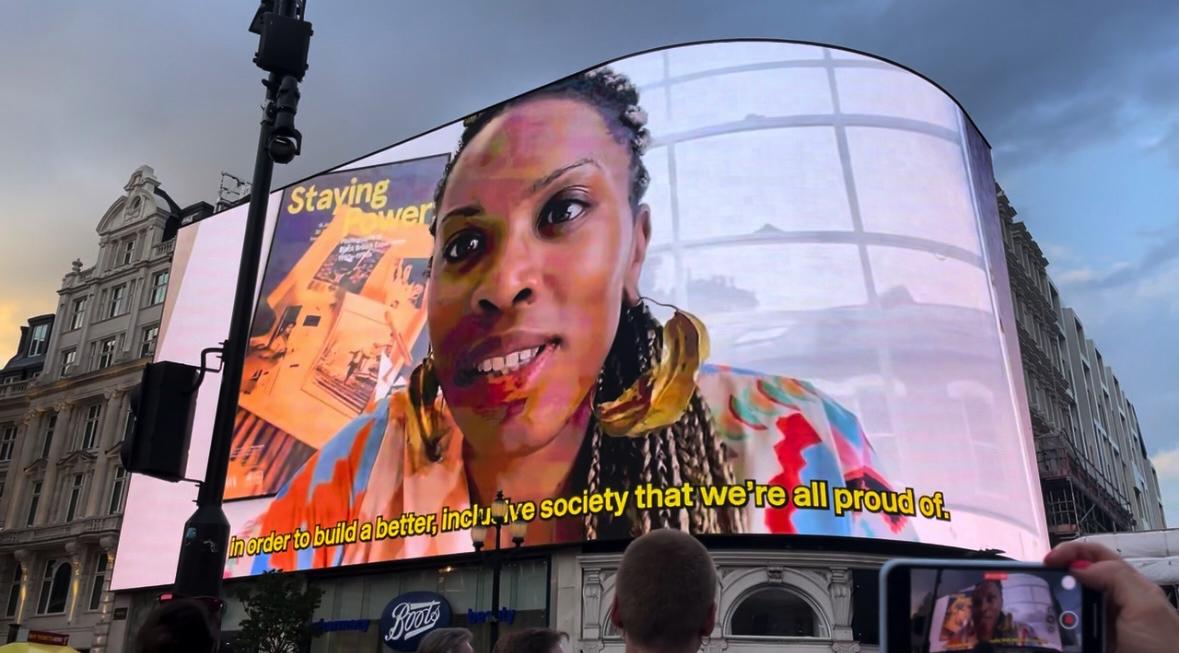
ML: You touched on insecurities and the baggage from gaslighting and imposter syndrome that you were able to shed by investing in your personal development. Can you share your understanding of performative versus active allyship? Do you believe that there is such a thing as active allyship or can it only be performative?
LA: Allyship for me is qualified by a willingness to sacrifice privilege.
If you're not willing to sacrifice and rebalance power – and that also implies disrupting a sense of comfort that comes with thinking that the issue is over there and nothing to do with you – then you're not ready for even the possibility of allyship.
In that respect, I’m quite black and white. Like, it's not easy. This is not supposed to be easy. But because it's become a catchphrase there's this tendency or willingness to simplify it.
Again, it really comes down to – I know that this sounds trite – but real love.
It's not about the intention of the thing, it’s about the impact of it.
“I'm going to be an ally, I want to have the badge!” The intention may be there but if you don't follow through then that's not allyship.
The intention’s there but you don't want to sacrifice or give anything up, or look at yourself in a way you've never considered before and be honest with yourself about your complicity in other people’s suffering. That's not allyship.
Because of people's discomfort with sacrifice, a lot of conversations about allyship are extremely performative. It's a waste of time and space.
Allyship is a lifelong commitment to criticality and a sense of responsibility and accountability. It’s a commitment to continual self-reflection and appropriate action. It's a stance of saying “I want to be truthful, helpful and accountable”.
Underlying that, being an ally isn’t about you. It’s not about being some martyr or having a badge. Does a good ally even want to say that they’re an ally?
It's supposed to be identifiable because of your work and how you show up. Other people should be able to call you an ally, not you self-proclaiming it.
Nova Reid is somebody who’s written extensively on this – her book ‘The Good Ally’ is on my to-read list.
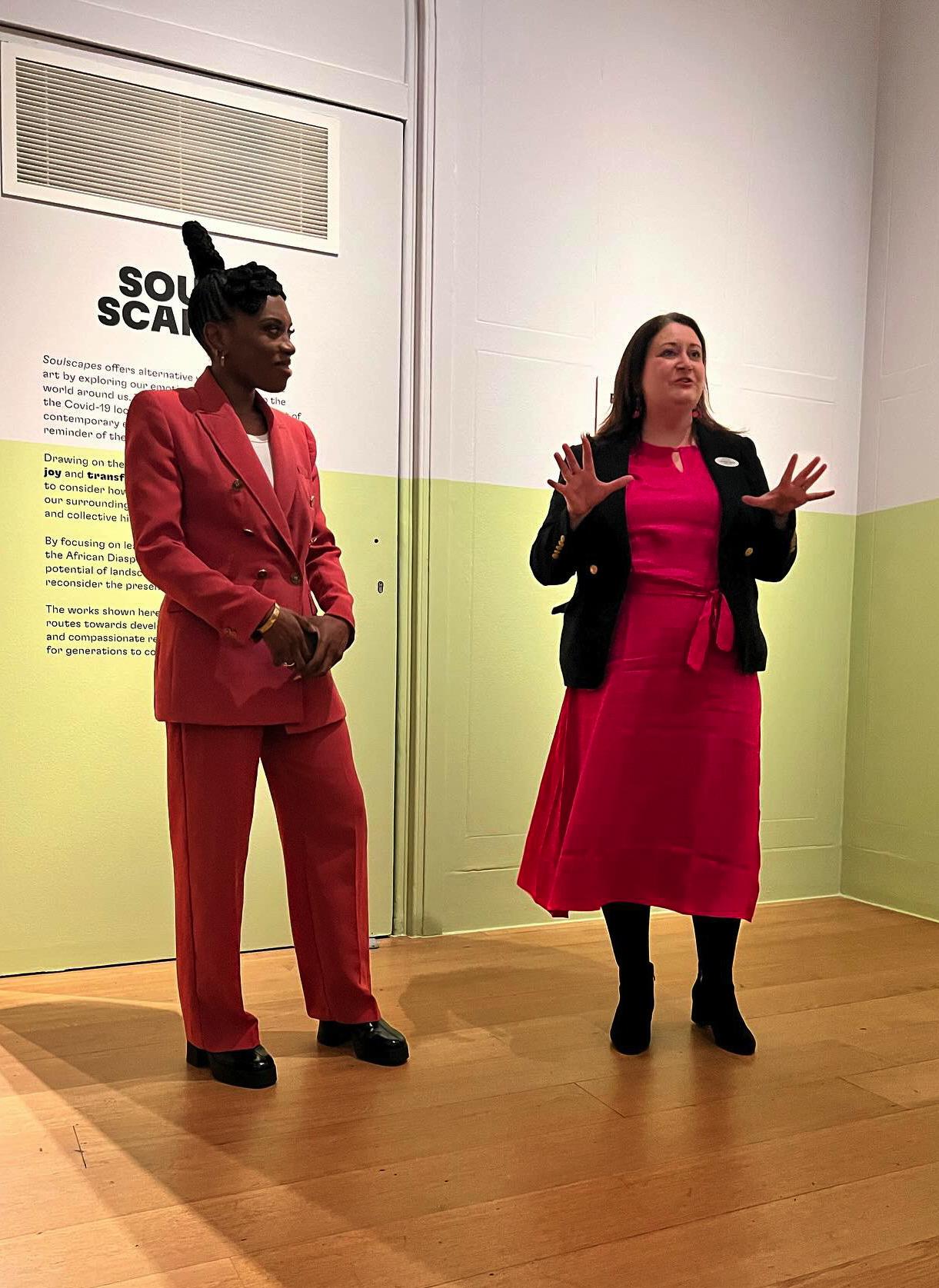
ML: After establishing Black British Art, in 2021 you joined the Black Cultural Archives as Interim Managing Director. For the next three years your mission was to make art more accessible to the community. Who are some figures in the contemporary Black British art scene who inspire you?
LA: There are so many artists I admire.
I really love Alberta Whittle’s practice because so much of it is rooted in deep love and care for people, respect for elders and our planet. I love the plurality of her expression: performance, painting, video... She’s a deeply soulful human being and artist and I've got a lot of time for her. It's a real honour to be in conversation with her.
Another artist who I really respect is Evan Ifekoya. I’m most attracted to artists who demonstrate a commitment to providing profoundly immersive experiences and I love how Evan does this in their work.
They create these bold installations that I’m drawn to as a person who has a somatic understanding of the world – even when I see visual art, I have a physical response to it. And I think that's rooted in my dance upbringing, being quite athletic. I'm really moved by works that pull out a different experience of my body and my relationship to the work. I find that a lot through Evan’s practice.
Someone who I deeply respect for the space they've opened up for other artists is Bolanle Tajudeen, the creator of Black Blossoms, who asked me to teach a course on Black British art.
There are so many phenomenal people, hugely impactful and influential artists like Sonia Boyce, Claudette Johnson, Kimathi Donkor...
I'm spoiled for choice, there are too many to name. Not so long ago, many people would struggle to name one Black British artist. Now, I could give you ninety just off the top of my head.
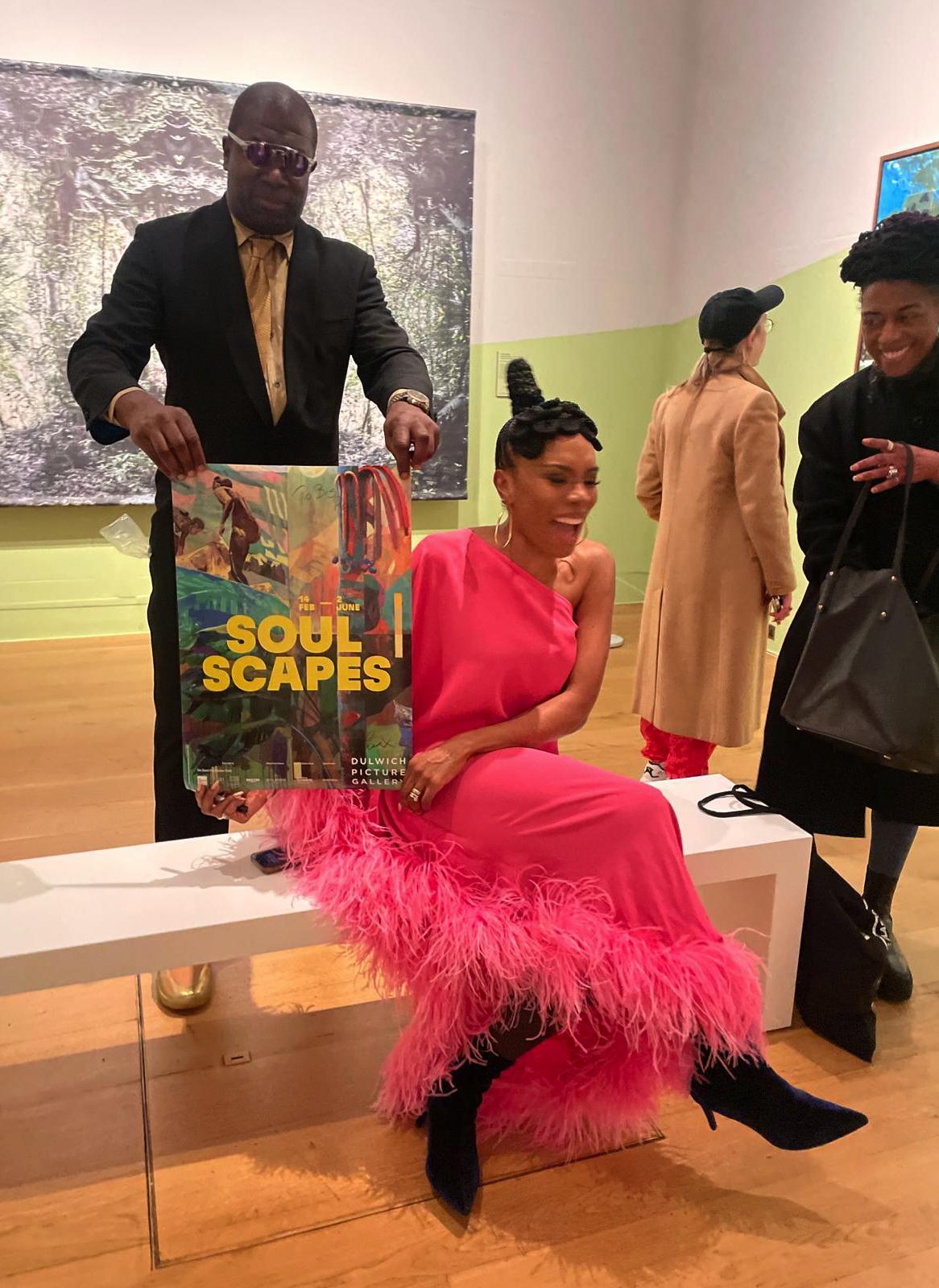
ML: As the Managing Director of the Black Cultural Archives for the past three years, you held space for the UK's Black art community. What was the experience like to grow into – was it what you expected?
LA: This interview is turning me out something different! No, I had no idea what to expect.
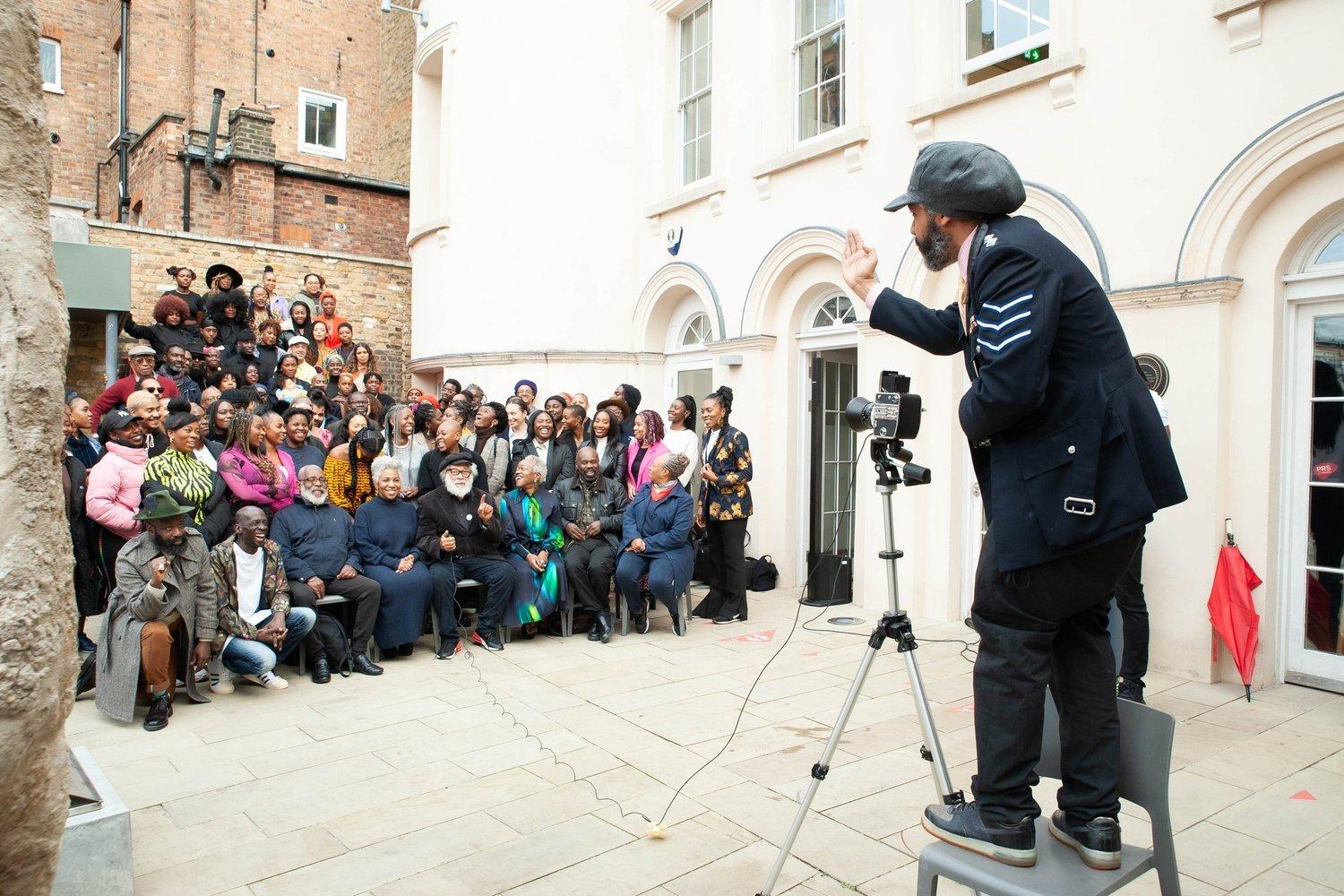
The beauty of this opportunity was that it was a full circle moment. I first came into connection with the Black Cultural Archives in my early twenties as a volunteer. Twenty years later, I had the opportunity – or was encouraged – to apply for the role of Interim Managing Director which was a one year role. It felt like the perfect opportunity for me to bring my professional experience together with my personal and intellectual interests. It was a great alignment.
What started as one year grew into three and I’m grateful to have been given the chance to contribute to such an important institution of Black British culture.
The sense of community that I felt at BCA is something I am truly inspired by. Stepping back into full-time curation, this is something that I’ll be drawing on and intend to grow.
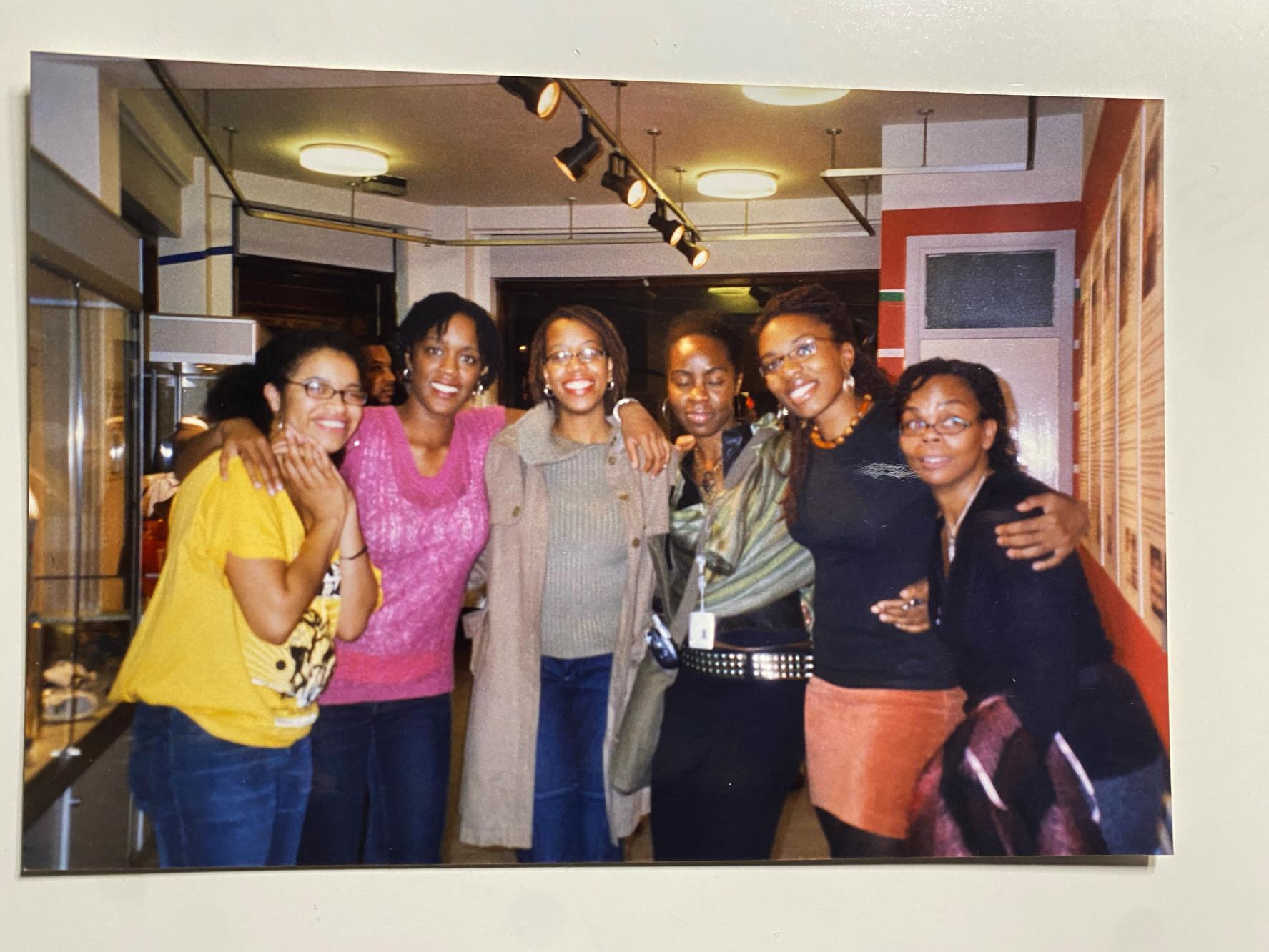
ML: Your role comes with a lot of expectations and responsibilities. As one person who's trying to curate and advocate for the community, inevitably you can't make everyone happy all the time. Are there ever any instances where you felt underappreciated in your role? Do you have an advocate who looks out for you?
LA: (laughs) Oh my God, stop it! Time out!
In all seriousness though, to work in culture and to care about it is to not necessarily have the support that you would have in another sector, unfortunately. The challenges of leadership in the culture and voluntary sector are shared.
You do this for the love. Not for the money – and rarely for the likes. You do it because it's mission-led and so, in that context, you are often overworked and underpaid and I'm not alone in that. That's as much as I will say on that.
For me, my sources of energy are my amazing personal advocates: my husband, my immediate family, my phenomenal friends and I have amazing networks of female leaders who I can pull on.
I also have informal mentors who have really helped me make sense of challenges that I was very new to. My faith always pulls me through – I absolutely would not be where I am without it.
Part of growth and development is growing in appreciation and gratitude for the multiple blessings you have in your life and this is something that is becoming a profoundly important practice in my life – just being grateful.
This is something that I've had to develop because it's very easy to look at what's wrong or doesn't exist or to overlook how far you've come. To acknowledge and see how many people you've been able to lean on to get here.
When I stop and really think about it, I'm hugely moved by how many advocates I have here in the UK and abroad.
ML: What are your plans within the arts and culture for 2025?
LA: The last three years at the Black Cultural Archives taught me a lot about the relationship between vision and impact. One of the most satisfying things people say to me is that I helped get more eyes on the archive or that I helped the organisation to feel more open and connected to people’s love for culture and community.
Before rushing into a new role, I’m taking some time out to rest, reflect and imagine what’s possible in this next chapter. There are two creative projects –– a book and a film – that I’ve been working on in the background for a few years and several artists who I’d love to collaborate with more closely. That both Black British Art and Lisa Anderson Art Advisory exist as platforms through which I can realise some of this work is something I’m grateful for.
It’s a scary but exciting time. I fully understand the significance of the vision I have for cultural advocacy, community and empowerment at a time when so much division and fear is being stoked. I guess now is time to take my leadership to the next level and connect the dots both here in the UK and across the diaspora.
ML: Thank you for sharing this Lisa, and your journey in Black British Art. I appreciate you taking the time.
LA: Thank you too, I’ve enjoyed this.
This article features in The Quick + The Brave Paper Zero : ‘Advocates + Allies’ out now.
Pre-order yours from our shop on Ko-Fi today.
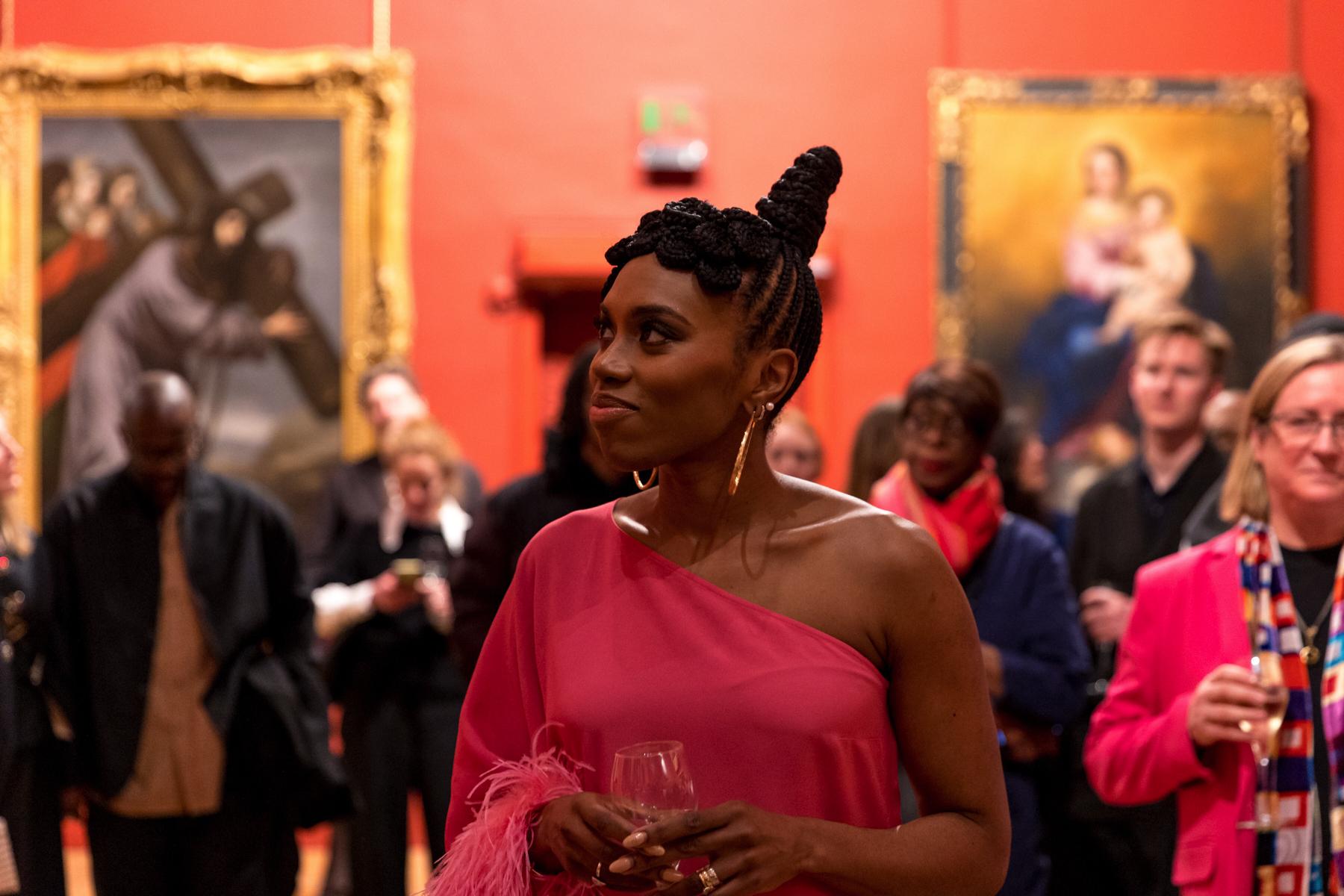
Follow Lisa Anderson: @lisaandersonaa
Follow Black British Art: @blackbritishart
Visit Lisa Anderson Arts Advisory: www.lisaandersonartadvisory.com
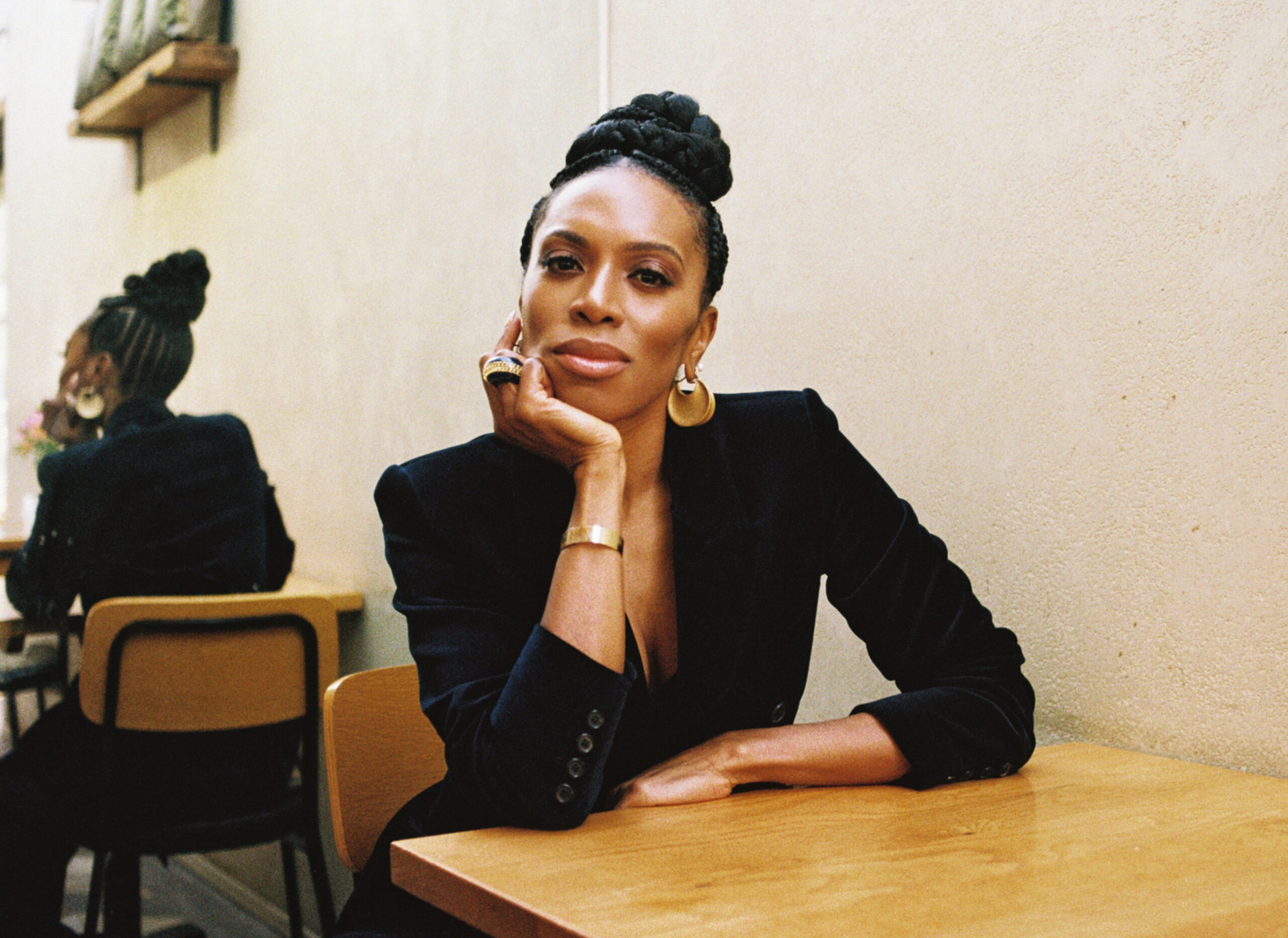
PHOTOGRAPHY: C/O LISA ANDERSON + PORTRAITS BY EDDIE OTCHERE
Enjoyed this article?
Support TQTB today. Become a member.
Slow your scroll.
Fill in your details to subscribe to our newsletter.
Sign up for THE QUICK + THE BRAVE
Humanity first media in print and online. Culture Today.
No spam. Unsubscribe anytime.